The Stress-Free Long-Haired Cat Grooming Routine (Step-by-Step)
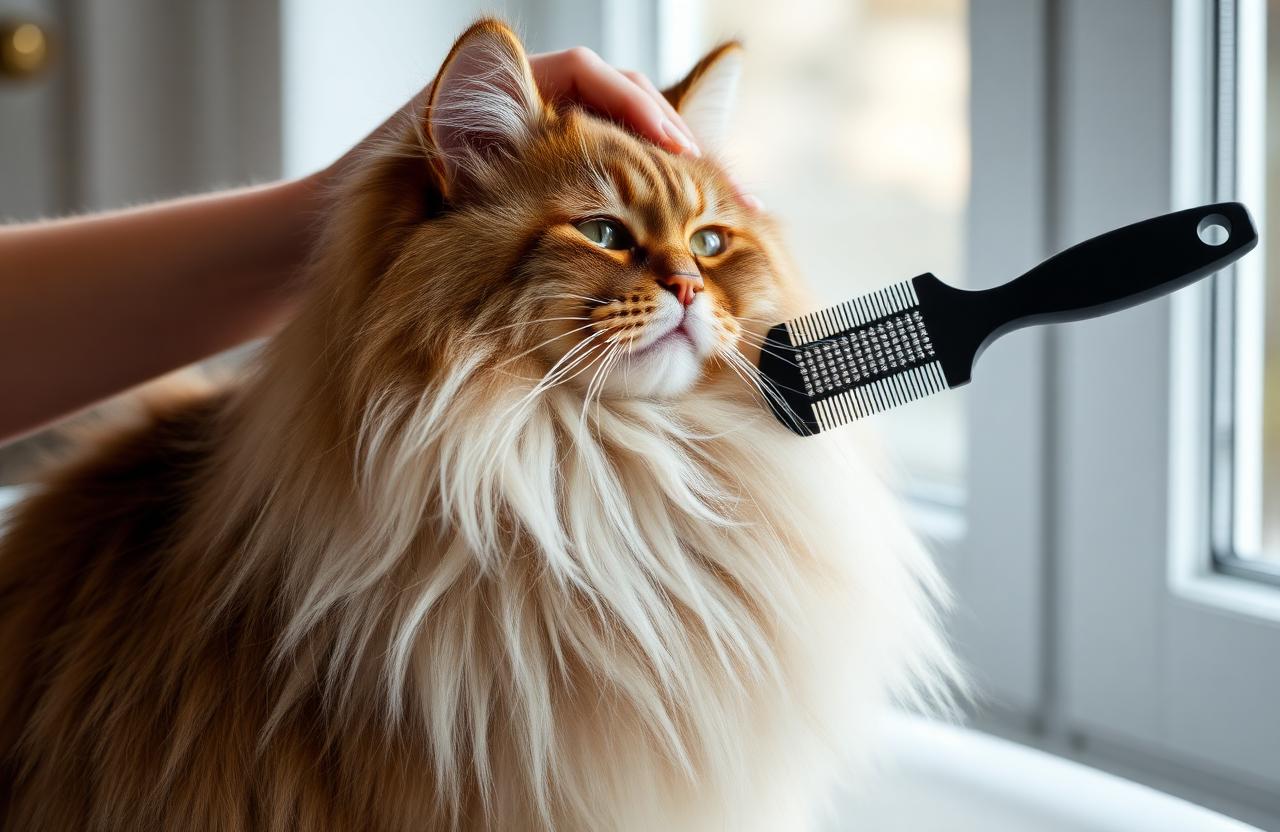
If you share your home with a long-haired cat — Maine Coon, Persian, Ragdoll, Siberian or domestic longhair — grooming isn't optional. Done badly, it becomes a weekly wrestling match. Done right, it's two minutes of bonding that prevents painful mats and trips to the groomer for shave-downs.
Why Long Coats Need Help
Cats self-groom, but long double coats trap loose undercoat, dander, and humidity. Within days, friction zones (armpits, behind the ears, base of the tail) start to felt into mats that pull skin tight and cause real pain.
The Tools That Actually Matter
- Steel greyhound comb — the single most important tool
- Slicker brush with flexible pins for finishing
- Detangling spray (silicone-free, cat-safe)
- Blunt-tip safety scissors for emergencies — never close to skin
- High-value treats (lickable tubes work wonders)
Skip the deshedding "blade" tools (Furminator-style) on long coats — they damage the topcoat. Pros use combs.
The 2-Minute Daily Routine
- Lickable treat first. Pet, then comb a small section while they lick.
- Comb in the direction of growth — start at the head, work back.
- Lift and comb in layers on the belly and "armpits."
- End on a positive section (most cats love chin and cheek combing).
Two minutes a day prevents 95% of mats. The cat learns combs = treats.
Weekly Deep Comb (10 Minutes)
- Spritz detangling spray on dry coat.
- Greyhound comb every section to the skin.
- Check ears, tail base, and trousers for tiny knots — comb out before they grow.
- Wipe eyes if your cat tears (Persians especially).
- Trim nails every 2 weeks while they're already calm.
What to Do With Existing Mats
Never bathe a matted cat. Water tightens mats and causes skin sores. Instead:
- Tease loose mats apart with fingers and detangling spray.
- For tight mats: book a professional groomer for a sanitary or "lion cut." It's painless and the coat regrows.
- Never use scissors blindly — cat skin is paper-thin and ER bills are not fun.
Bathing: When and How
Most long-haired cats need a bath only every 4–8 weeks if they're indoor. Use a cat-safe shampoo, lukewarm water, and a non-slip mat. Towel dry, then blow dry on the lowest, coolest setting while combing — wet mats become permanent mats.
Stress-Reduction Tips From Pro Groomers
The cat that fights grooming isn't being difficult — they're scared or in pain. Slow down, shorten sessions, and reward heavily. Calm cats are made, not born.
- Never restrain by the scruff after kittenhood — it triggers panic.
- Use Feliway diffusers in the grooming room.
- Stop sessions while the cat still wants to keep going.
For breed-specific coat care, see our cat breeds hub or our Maine Coon guide.
Key Takeaways
- A steel greyhound comb beats every fancy gadget.
- Two minutes daily prevents almost all mats.
- Never bathe or scissor a matted cat — call a pro.
- Pair grooming with food rewards from day one.
FAQ
How often should I brush a long-haired cat?
Briefly every day plus one deep 10-minute session weekly.
Are professional groomers necessary?
Most cats only need a pro 1–4 times a year for sanitary trims and deep combing.
What if my cat hates grooming?
Restart with 30-second sessions and lickable treats. Build duration over weeks, not days.
Can I shave my long-haired cat in summer?
Generally no — the coat insulates against heat too. Shave only for medical or matting reasons.
Conclusion
A great grooming routine isn't about technique — it's about consistency and trust. Two calm minutes a day will save you (and your cat) hours of stress later. Browse more grooming & lifestyle guides for season-by-season coat care.